Filtrar por ano
334 livros registrados
2026
Software Engineering
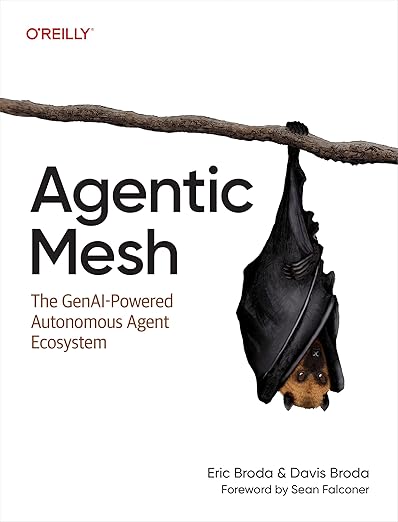
Agentic Mesh: The GenAI-Powered Autonomous Agent Ecosystem
Eric Broda, Davis Broda
With the rise of autonomous agents, the question is no longer "How do we build agents?" but rather, "How do we manage an entire ecosystem of them?" This book explores the next frontier of this technology, where interconnected agents collaborate, transact, and fulfill tasks autonomously. Building on established concepts like API service mesh and data mesh, authors Eric and Davis Broda introduce agentic mesh as a transformative architecture designed to safely manage growing ecosystems of agents at scale.

Software Engineering
Agentic Coding with Claude Code: The everyday developer's guide to agentic coding with Claude Code
Eden Marco
Most developers encounter Claude Code through chat-style prompting, but that approach breaks down as projects grow and automation must be safe, repeatable, and controlled. Agentic Coding with Claude Code shows how to move beyond ad hoc prompts and use Claude Code as an extensible, agent-driven development platform.
Business
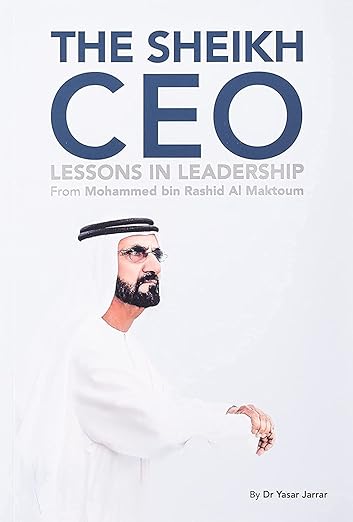
The Sheikh CEO
Dr. Yasar Jarrar
Learn about the rise of Dubai and its robust trading network in The Sheikh CEO - Lessons in Leadership from Mohammed bin Rashid Al Maktoum. The book is written by the Sheikh's closest aide and adviser, Dr. Yasar Jarrar. The book describes how the metropolis came into existence for what it is known today. The Sheikh CEO paperback book lets you explore and learn how the city has sustained its growth and adapted to several challenges.
Business
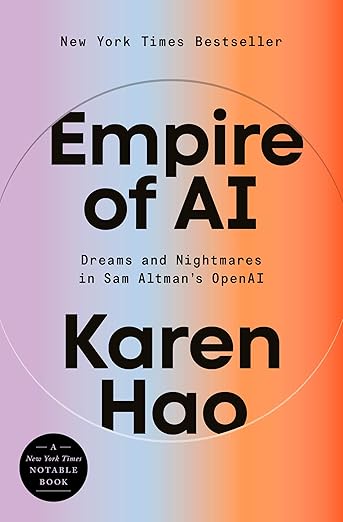
Empire of AI: Dreams and Nightmares in Sam Altman's OpenAI
Karen Hao
Over time, Hao began to wrestle ever more deeply with that question. Increasingly, she realized that the core truth of this massively disruptive sector is that its vision of success requires an almost unprecedented amount of resources: the “compute” power of high-end chips and the processing capacity to create massive large language models, the sheer volume of data that needs to be amassed at scale, the humans “cleaning up” that data for sweatshop wages throughout the Global South, and a truly alarming spike in the usage of energy and water underlying it all. The truth is that we have entered a new and ominous age of empire: only a small handful of globally scaled companies can even enter the field of play. At the head of the pack with its ChatGPT breakthrough, how would OpenAI resist such temptations?